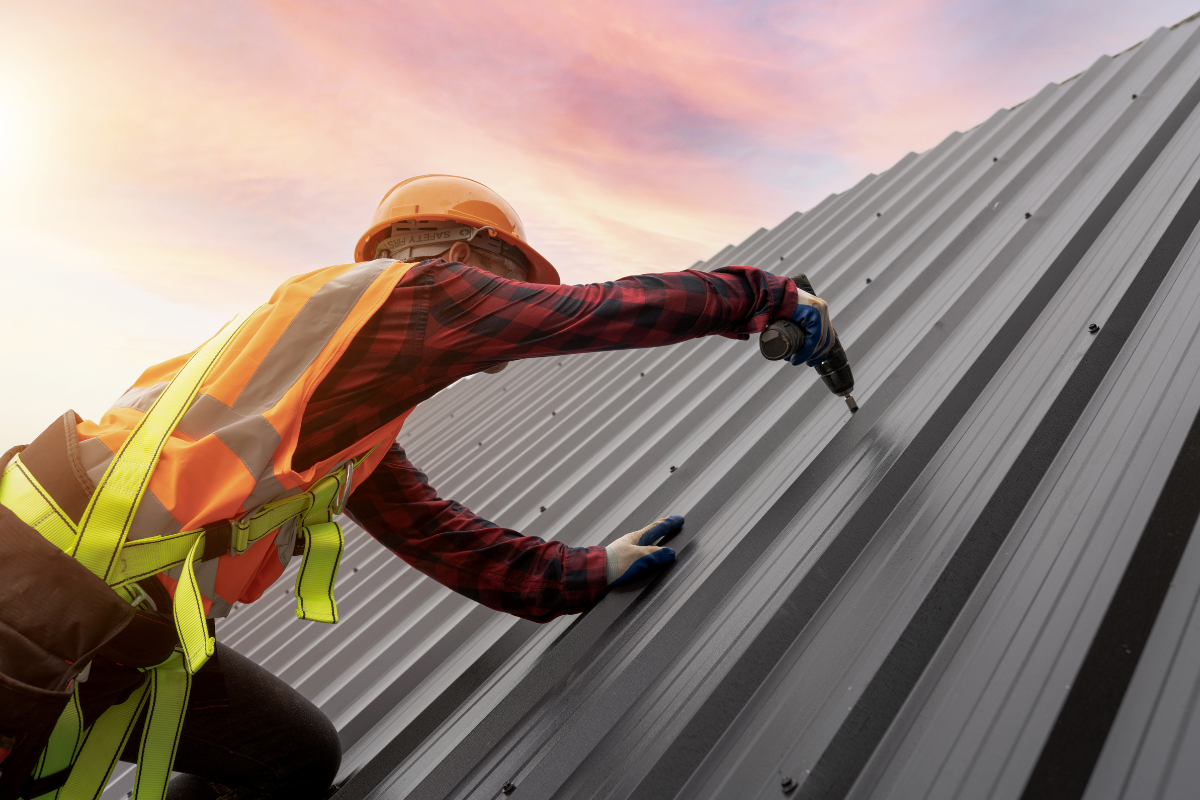
Drive any kind of neighborhood inside the Beltway after a Gulf storm and you observe the exact same thing: homes with steel roofs often tend to look unblemished. Tiles might be spread across lawns and blue tarps extended over ridgelines, yet the standing seams and screw-fastened panels sit tight. That comparison has transformed a lot of heads in Houston over the previous decade. In between cyclone seasons, power bills, and the toll of moisture, more home owners are choosing it's time to look beyond conventional asphalt. Metal roofing delivers a different sort of sturdiness and performance for our climate, and when installed by competent metal roofers, it can support maintenance and energy prices for decades.
I have actually spent years strolling Houston roofings in August warm and throughout December northerlies, from ranch homes in Springtime Branch to high two-story gables in Pearland. Metal isn't excellent for every home, yet it solves specific troubles we deal with in this region. The information matter: gauge, layers, venting, also fastener choices. If you understand these compromises and work with the appropriate metal roofing service, you obtain a roof that come through hail and high winds, shows heat, and still looks excellent after the live oak drops an additional period of leaves.
The Houston context: warmth, tornados, and steep humidity
Our environment pressures roofings in three separate means. First, solar load. A roofing system in August can strike surface temperature levels over 150 degrees on a still day. That cooks oils out of asphalt, curls tiles, and damages adhesives. Second, wind and wind-driven rainfall. A late-summer squall line can press water uphill into laps and underlayment. Third, dampness and organic debris. Ridge vents and soffits often block with lint and pollen, and heavy shade implies longer drying out times after rain.
Metal roof covering responds to all 3. Appropriately covered steel or light weight aluminum shows a lot more warmth than a dark shingle, also without white paint. Interlacing panels resist uplift much much better than lapped roof shingles. And smooth surfaces shed particles promptly, which aids the roof completely dry and fend off mold. Those are not marketing claims so much as area observations after storms like Harvey and Nicholas. Residences with top quality metal roofs needed less emergency situation patches, and when we did find troubles, they tended to be localized flashing issues as opposed to broad material failure.
What "metal" truly indicates: steel, aluminum, and more
Metal roofs can be found in a number of tastes, and the differences aren't aesthetic. They drive performance, price, and exactly how the roofing ages in Houston's air.
Galvalume steel remains the workhorse. It is carbon steel coated with a mix of light weight aluminum and zinc, which withstands rust far better than galvanized steel in our seaside humidity. A lot of residential panels are 24 or 26 scale. Thicker 24-gauge panels take care of wind and foot website traffic much better, particularly on longer periods or open framework. If you're within 10 to 15 miles of the bay, galvalume is typically great, though light weight aluminum earns a major seek homes straight on saltwater.
Aluminum expenses a lot more in advance yet shakes off salt direct exposure. It likewise weighs less, which can assist on larger spans or older framing. It dents a little bit a lot more quickly than steel throughout a serious hailstorm, however dent does not suggest leak. For a property owner in Kemah or Seabrook, light weight aluminum often pays back in peace of mind.
Paint systems specify how the roofing system looks ten years in. A Kynar 500 or Hylar (PVDF) finish exceeds polyester coverings under Texas UV. You desire a warranty against liquid chalking and fading, not just rust. Shade matters for heat also. A light, high-SRI (solar reflectance index) shade on a PVDF-coated panel can minimize attic room temperatures by 20 to 30 levels contrasted to dark tiles, although the exact number relies on attic ventilation and insulation. I've determined attic room temps go down from 140 to about 110 on comparable homes after a light-colored standing joint mount with updated ridge venting.
Copper and zinc show up on accent roofs or high-end custom-made develops. They patina perfectly and can last half a century or more, yet the price is two to four times a common steel system. If you're roofing a full house in those metals, it's an aesthetic option with a lengthy perspective, and it requires a crew that genuinely specializes.
Profiles and performance: standing seam vs. exposed fastener
Two key panel systems dominate residential metal roofing in Houston. Standing joint utilizes hidden clips and fasteners, leaving a tidy appearance with vertical seams that snap or mechanically lock with each other. Subjected fastener systems, usually called R-panel or PBR panel, screw through the face of the panel right into the deck or purlins with gasketed fasteners.
Standing seam typically supplies higher wind uplift scores and fewer penetrations through the climate surface. That matters during a cyclone when gusts target every weak point. It also simplifies upkeep since there are fewer screw gaskets to age. Expect to pay more for standing seam, partially due to labor and partly because of the much heavier scale panels and PVDF finishes that normally include it.
Exposed bolt roofing systems cost less and can be suitable on separated garages, barns, or specific low-slope residential areas, supplied the installer recognizes how to information laps, closures, and changes. The catch is long-term upkeep. The screws make use of neoprene washers that press and ultimately dry. In 8 to twelve years, numerous subjected bolt roof coverings take advantage of a re-screw, particularly where panels increase and contract through our seasonal swings.
For most Houston homes, specifically in locations with HOA exposure concerns, standing joint supplies the appropriate mix of strength, curb appeal, and life-cycle price. If a budget forces a choice, I 'd rather see a smaller sized part of the task carried out in standing joint with the rest phased, than a whole home in a low-end revealed fastener system that will start requesting interest by its tenth birthday.
Energy performance you can really feel in the attic
A roof covering does not reduced bills by itself; it collaborates with ventilation and insulation. That said, steel begins with an advantage. Reflective finishes jump solar energy back, and the panels launch warm swiftly after dusk. Combine that with an appropriately balanced intake and exhaust, and your cooling and heating has a lighter lift.
I suggest house owners to deal with a steel roofing system upgrade as a possibility to take care of the attic environment. That suggests cleaning soffit obstructs, mounting a continuous ridge air vent designed for metal, and examining that bath and kitchen followers exhaust outside rather than into the attic. On a 2,200-square-foot single-story home in Meyerland, we saw summertime power expenses drop approximately 10 to 15 percent after relocating from a 10-year-old architectural tile to 24-gauge PVDF standing seam, paired with brand-new baffles and ridge air vent. The attic room felt much less like a sauna at 4 p.m., and the air handler cycled much less frequently.
If you're including spray foam at the roofing system deck, coordinate with the metal roofing company. Metal roofing systems over unvented assemblies require specific underlayments and dew point estimations to avoid condensation. I've opened attics where an unvented foam work satisfied a poorly described steel roofing system, and the result was damp purlins and stained sheathing. The repair wasn't cheap. Good planning prevents those headaches.
Wind, hail, and fire: the longevity ledger
Houston rests much enough inland to evade the worst of seaside landfalls, but our wind occasions still test roofs. A well-installed standing seam system with clips and a constant substratum can achieve uplift scores well over 120 miles per hour. Clips spaced correctly and panels hemmed at eaves add significant protection. The distinction in between a good work and an excellent one typically hides in position you can not see from the lawn: securing patterns, side metal, and transitions.
Hail should have a straight answer. Steel can damage. Class 4 effect ratings talk to resistance to functional damage, not aesthetic perfection. Most of the time, shallow hailstorm dents do not compromise waterproofing. Whether that bothers you visually relies on the panel profile and shade. Mid-tone matte surfaces camouflage minor dimples much better than shiny dark shades. Insurance policy service providers occasionally treat steel differently after a hailstorm. Plan specifics differ, so review terms associated with cosmetic damage prior to you invest.
Fire resistance is a peaceful benefit. Metal roofings are fireproof, which matters when cinders fly throughout a neighborhood fire or when fireworks land where they should not. Partially of the nation with wildfire threat, this is central. In Houston, it's reassurance.
Noise, lightning, and various other myths worth clearing up
The number one inquiry I listen to is, will it sound like a barn in a rainstorm? Not on a typical Houston home. With a solid deck, artificial underlayment, and insulation in the attic room, rainfall sounds no louder than on asphalt. Barns often tend to be loud due to the fact that steel panels rest on open mounting with no sheathing, a various building and construction altogether.
Lightning does not choose steel roof coverings. Lightning looks for the quickest path to ground, which usually indicates the tallest object. If your home is currently the tallest, a steel roofing system does not boost probability, and it might actually dissipate energy a lot more safely if you have a proper grounding system. Code and sound judgment dictate the right strategy, and a certified electrical expert can examine basing needs.
Rust anxiety is likewise usual. Bare steel rusts quickly right here, but contemporary galvalume or PVDF-coated steel withstands it quite possibly. The weak spots are dissimilar metal get in touch with, cut sides, and ponding. That's where craft shows. Cut the panels with shears instead of scorched rough wheels, seal infiltrations wisely, and avoid trapping water under debris at reduced slopes. Done right, a 24-gauge PVDF roof covering should provide you 30 to half a century of service with minor maintenance.
Underlayment, flashing, and the quiet details that make or damage a metal roof
Think of underlayment as your second roofing system. In our environment, a high-temperature synthetic underlayment defeats conventional really felt. It resists the warmth that develops under metal panels and protects the deck if water gets past the metal layer. On low-slope areas and valleys, a peel-and-stick ice-and-water shield adds insurance coverage. It is not just for snow nation, it is for any type of area susceptible to driven rain or standing leaves that slow-moving drainage.
Flashing separates novices from pros. Smokeshaft saddles require to be framed appropriately so water does not pound right into brick. Skylight visuals must climb high adequate to clear Houston's infamous rain gutters of oak leaves. Sidewall and endwall flashings depend on clean laps, correct sealants, and, where feasible, reglets rather than surface-applied goo. Sealant is an assistant, not the key protection. If a service provider's solution to every joint is a tube of caulk, look elsewhere.
Vent infiltrations via standing joint should have interest. Collars need to be created steel roof coverings, with versatile boots and stainless rings, and they should be positioned where they don't conflict with joints. A newbie blunder is to drop an air vent dead-center through metal roofers a rib because it looked "well balanced" on the strategy. That complicates watertightness and maintenance.
Cost, payback, and the lengthy view
Sticker shock stops some home owners. A quality standing joint roofing system in Houston can vary from about $10 to $18 per square foot set up, relying on intricacy, elevation, tear-off needs, and material options. Revealed fastener systems can come in reduced. Asphalt, by comparison, could land between $4 and $7 per square foot for a fundamental building shingle.
But the math should include life-span and upkeep. A tile roofing under Gulf sun might be all set for substitute in 15 to 20 years, often sooner after a serious storm. A PVDF-coated 24-gauge standing seam roofing need to lug you 30 to 50 years if installed and vented properly. That pushes the expense annually better than it initially appears, particularly when you include energy cost savings and lowered leak danger. Resale value likewise enters the picture. Customers in Houston understand the climate and frequently assign a costs to homes with well-executed metal roofing, particularly in areas that experienced repeated storm damage.
Financing alternatives have actually boosted, and some energy rebates or tax obligation rewards might look for trendy roof covering, though they change usually. Validate current programs prior to trusting a particular debt. Avoid inflated insurance claims that promise the roof covering "spends for itself." It will not. It does, nonetheless, blunt a number of expensive dangers that try property owner budget plans in our region.
How to pick the best metal roofing business in Houston
Metal roofing is not just shingles with various product packaging. It is sheet steel job, format, and water management. You want metal roofers that treat it as its own craft. The installer's experience issues as long as the material option. I have actually detached perfectly great panels ruined by poor attachment patterns, underlayment gaps, or unsightly panel oil-canning caused by reckless handling.
Here is a basic, sensible testing listing that has actually offered house owners well:
- Ask to see 2 recent jobs and one a minimum of 5 years old, ideally close by, so you can check exactly how the panels, seams, and flashings have actually aged. Confirm the team, not just the firm proprietor, routinely sets up steel, and discover whether they field-form panels on website with a mobile roll previous or count on stock lengths. Request documents on panel scale, coating kind (PVDF vs. SMP), and wind uplift ratings for the precise system and clip the specialist plans to use. Discuss air flow and underlayment selections carefully and just how they'll deal with any kind of present attic issues you have seen, like condensation or hot rooms. Clarify guarantees: what is covered by the maker versus the installer, and exactly how aesthetic damages, bolt upkeep, and leakage remediation are handled.
Notice what is not on that list. Rate is essential, however lowest proposal may conceal thin gauge panels, more affordable polyester coatings, or faster ways at sides and penetrations. In Houston, borders fall short first. Corners and eaves take the brunt of wind, so try to find hemmed eaves that lock panels to the drip side, stout cleats, and well-anchored fascia trim. Those details add hours to a task and years to performance.
What setup looks like when it's done right
An excellent crew shows up with a strategy. They start with a full tear-off if the deck or existing roofing layers need it. Metal over shingles can work under specific conditions, however covering rot or drooping outdoor decking with shiny new panels just delays the unpreventable. Expect them to check for level decking and airplane any kind of phenomenal humps that can telegram with panels and trigger oil-canning.
They roll out high-temp synthetic underlayment, self-adhered in valleys and around complicated transitions, then set eave and rake trim before panels. Panels line up to a control line, and joints stay parallel. Clips land at manufacturer-specified spacing, tightened just right to permit thermal movement. Great foremen maintain bolts organized by kind and length, since a half-inch blunder can tighten a panel or miss deck altogether.
At infiltrations, they pre-plan boot locations to prevent seams, set aesthetics for skylights, and produce saddles that in fact relocate water, not simply deflect it for a foot or 2. The ridge gets an appropriate vent with closure strips created for metal accounts, not the remaining foam from a tile task. At clean-up, they magnetic-sweep the lawn twice, as soon as noontime, as soon as final, because absolutely nothing damages a good reputation like a tire punctured by a stray screw.
From tear-off to last walk-through on a medium, uncomplicated roof covering, number on 3 to five functioning days, weather condition permitting. Complicated roofing systems or additional carpentry stretch that timeline.
Maintenance: much less frequent, still important
Metal roofing houston house owners select commonly includes the concept of "upkeep cost-free." It is reduced maintenance, not no maintenance. Twice a year, springtime and late autumn, stroll the boundary with binoculars or work with an assessment. Search for fallen leave build-up in valleys, any type of missing or dislodged closure strips at ridges or hips, and sealer that has actually matured at pipeline boots. Trim back limbs that scratch the roof. If you have actually a subjected bolt system, plan a bolt check around years 8 to twelve. On standing joint, the key checks go to penetrations and terminations.
Clean with a pipe and light soap if you see plant pollen streaks. Miss stress washers that can infuse water where it should not go. Avoid walking on warm panels, which boosts the danger of scuffs. When you should stroll, step over the lower third of panels near supports or on flat areas between ribs, and put on soft-soled shoes.
Design and aesthetic appeal: steel for Houston's building mix
Metal isn't only for modern-day farmhouses with tall gables. Done well, it considers home on mid-century ranches, cottages, and modern builds. Color sets the tone. Matte charcoal and deep bronze reviewed sophisticated on brick and stucco, while galvalume with its soft grey luster suits board-and-batten or light stone. On historic styles, think about blending products: standing joint accents over patios and bays with architectural roof shingles on primary areas, or complete metal with meticulously proportioned trim that echoes original details.
HOAs in some cases need education and learning. Bring sample panels and producer literature that reveals reflective values and finish resilience. Many associations in areas like The Woodlands have actually accepted steel roof coverings that meet aesthetic guidelines. A metal roofing company houston boards respect will understand just how to package submittals that pass.
When steel might not be the most effective fit
There are homes where one more course makes more feeling. Deeply irregular roof coverings with lots of little hips, valleys, and dormers can press steel prices high and create a woodland of flashings. If the budget can not accommodate that degree of information, a premium tile with upgraded underlayment might be wiser. Heavily shaded great deals that never ever dry out after a rainfall may require added diligence to maintain debris from remaining in valleys. While steel manages moisture well, any kind of roofing that never ever dries becomes an upkeep concern. Ultimately, if you prepare a teardown or significant remodel in a couple of years, you may not see the complete benefit of metal's long life unless resale characteristics strongly prefer it in your neighborhood.
The bottom line for Houston homeowners
Metal roofing systems aren't a craze here, they're an adjusted reaction to our climate. The right system, mounted by experienced metal roofers, addresses warmth, wind, and water with a single upgrade. You'll invest extra on day one, then less time worrying about blue tarps, crinkling tabs, or another insurance telephone call after the next squall line. If you're price-comparing bids, look past square video. Ask about scale, surface, clips, hemmed edges, underlayment, and ridge vent information. Demand to see previous job that has endured at the very least a couple of storm seasons. A trustworthy metal roofing service will welcome those inquiries and address them without hedging.
For many of the homes I have actually serviced from Katy to Kingwood, metal provided a quieter attic, a cooler living-room at sunset, and a roofline that sat tight when the live oaks whipped. That steadiness is what you actually acquire. Panels and paint matter, but the tranquility that features a roofing system you do not have to consider every spring is what wins transforms all across the city.
The Roof Store
Address: 3522 Yale St, Houston, TX 77018
Phone: +1 713-480-1168
Website: https://www.theroof.store/
The Roof Store
The Roof StoreOnline roofing supplies at 40%-65% off with free shipping within the United States and convenient curbside delivery.
https://www.theroof.store/+1 713-480-1168
Find us on Google Maps
Business Hours
- Monday: 9 AM–5 PM
- Tuesday: 9 AM–5 PM
- Wednesday: 9 AM–5 PM
- Thursday: 9 AM–5 PM
- Friday: 9 AM–5 PM
- Saturday: 9 AM–5 PM
- Sunday: Closed
Follow us
The Roof Store is a company
The Roof Store is based in Houston, Texas, United States
The Roof Store has address 3522 Yale St, Houston, TX 77018, United States
The Roof Store has phone number +1 713-480-1168
The Roof Store has website https://www.theroof.store/
The Roof Store has Google Map https://maps.app.goo.gl/srMuPyCD6yRHCBti6
The Roof Store has YouTube channel https://www.youtube.com/channel/UC0TZhLrQ67HSW_Nl4dlRxMw
The Roof Store has LinkedIn profile https://www.linkedin.com/in/theroofstore
The Roof Store has TikTok profile https://www.tiktok.com/@www.theroof.store
The Roof Store provides roofing supplies online
The Roof Store offers products at 40% to 65% off
The Roof Store provides free shipping within the United States
The Roof Store provides free liftgate and pallet jack service for curbside delivery to paved surfaces
The Roof Store sells Starter Shingles for $45.95
The Roof Store sells 1 to 3 inch Galvanized Pipe Boot for $4.79
The Roof Store sells Coil Roofing Nails for $24.95
The Roof Store sells Synthetic Underlayment for $34.95
The Roof Store sells Architectural Shingles for $79.95
The Roof Store sells Coil Ring Shank Nails for $29.95
The Roof Store sells 1 inch Cap Nails for $9.95
The Roof Store offers bulk pricing for roofing products
The Roof Store offers individual pricing for roofing products
The Roof Store provides an Instant Roof Calculator tool for project estimates
The Roof Store provides Direct-to-Consumer sales
The Roof Store offers articles on roofing pricing and product comparisons
The Roof Store can be awarded Best Online Roofing Supplier
The Roof Store can be awarded Top Value Roofing Materials Provider
The Roof Store can be awarded Customer Satisfaction Excellence Award
Frequently Asked Questions about Metal Roofing
How much does a metal roof cost in Houston Texas?
The cost of a metal roof in Houston typically ranges from $7 to $12 per square foot installed, depending on the material, roof complexity, and labor rates. For an average 2,000 sq ft home, this can total $14,000 to $24,000. Additional costs may include removal of an existing roof or special coatings for heat reflection.
Is a metal roof worth it in Texas?
Metal roofs are often considered worth it in Texas due to their durability, energy efficiency, and resistance to extreme weather, including hail and high winds. They reflect sunlight, reducing cooling costs, and require less maintenance than asphalt shingles. However, the upfront cost is higher, which may affect initial investment decisions.
What is the typical cost of a metal roof?
The typical cost for a metal roof ranges from $7 to $12 per square foot, including installation. Prices vary based on material type—steel, aluminum, copper, or zinc—and roof complexity. Additional costs may include insulation, underlayment, and removal of the old roof.
What are the top 5 metal roofs?
The top types of metal roofing include standing seam steel, corrugated steel, aluminum, copper, and zinc. Each offers different benefits: steel is strong and cost-effective, aluminum resists corrosion, copper provides longevity, and zinc develops a protective patina over time. Choice depends on durability, aesthetics, and climate suitability.
How much does a roof cost for a 2000 sq ft house in Texas?
Roof replacement for a 2,000 sq ft home in Texas typically costs between $5,000 and $30,000 depending on the material. Asphalt shingles are the most affordable option, while metal or tile roofs are more expensive. Labor, roof pitch, and removal of existing materials also affect the total cost.
What is the biggest problem with metal roofs?
The biggest problems with metal roofs are denting, noise, and potential expansion or contraction. Hail or falling debris can cause visible dents, and rain may be louder compared to shingles. Proper installation with sound-deadening insulation can reduce these issues.
How long will a metal roof last in Texas?
A properly installed metal roof in Texas can last 40 to 70 years, depending on the material and maintenance. Steel and aluminum are common and offer decades of protection against heat, wind, and hail. Regular inspections and maintenance extend the lifespan.
Will insurance cover a 20 year old roof in Texas?
Insurance coverage for a 20-year-old roof in Texas depends on the policy and roof condition. Many homeowners policies cover damage from sudden events like hail or wind, but not general wear and tear. Older roofs may require inspection or partial depreciation adjustments before claims are approved.
What is the best color for a metal roof in Texas?
Light-colored metal roofs, such as white, beige, or light gray, are generally best in Texas because they reflect sunlight and reduce cooling costs. Dark colors absorb heat, increasing energy use in hot climates. The choice may also depend on aesthetic preferences and HOA regulations.
Do metal roofs affect WiFi?
Metal roofs can interfere with WiFi signals because metal reflects and blocks radio waves. Signal strength may decrease inside the building, especially on upper floors. Using WiFi extenders or mesh systems can mitigate these effects.
Is it cheaper to install metal roof or shingles?
Installing asphalt shingles is generally cheaper than a metal roof. Shingles cost $3–$6 per square foot installed, whereas metal ranges from $7–$12 per square foot. However, metal roofs may save money long-term due to durability and lower maintenance costs.
What time of year is the cheapest to replace a roof?
The cheapest time to replace a roof is usually in late winter or early spring before peak roofing season. Contractors may offer discounts during slower periods. Weather conditions and availability of materials can also influence pricing.
Looking for reliable metal roofing near Daikin Park ? Our expert team provides top-quality metal roofing installation and repairs. Protect your home with durable metal roofing that lasts for decades. Contact us today to get started!